In shortThe Crystal Maiden is a calcified human skeleton on the upper dry level of Actun Tunichil Muknal, the best known of 14 sets of human skeletal remains in that chamber. Calcite deposited by dripping water has given the bones a glittering crust. Visitors reach it in socks, on a marked route, carrying nothing, on a guided tour.
14sets of remains
A.D. 300-600Early Classic ritual use
12 feetladder to the dry level
350 m x 50 mmain hall above
Where the Crystal Maiden lies in ATM cave
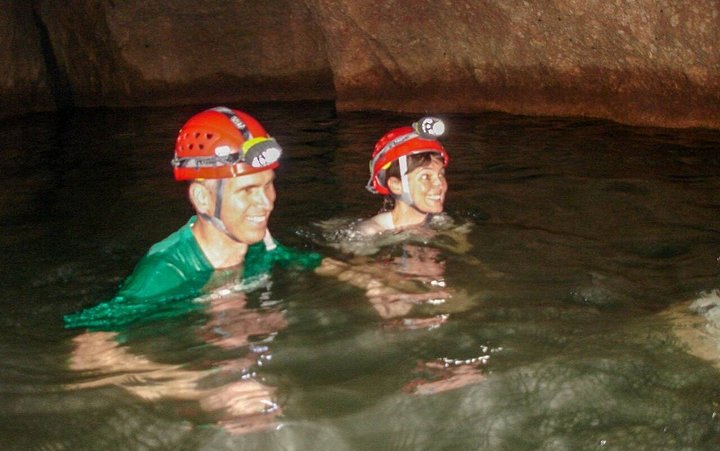
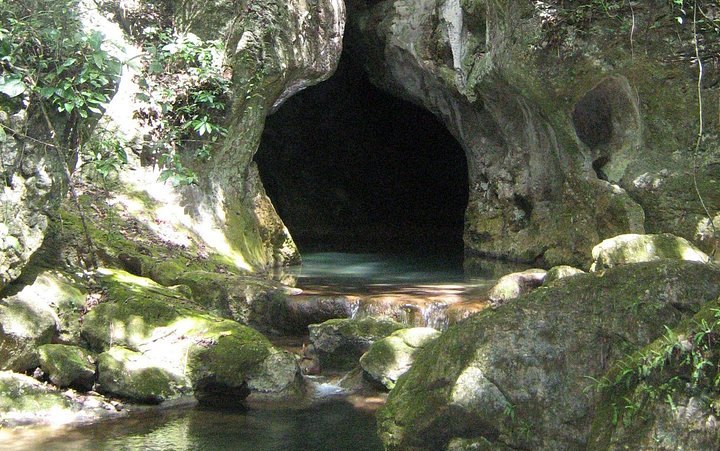
The skeleton is not near the entrance. It sits on the upper dry level of the cave, the prehistoric floor that runs above the river passage, and you only get up there after roughly 90 minutes of wading and climbing upstream at depths from ankle to chest. The transition is a 12-foot ladder, taken with all four points of contact, into the chamber one licensed operator calls The Cathedral. That main hall is given as 350 metres long and 50 metres wide, so there is height and space around you once the water is behind you.
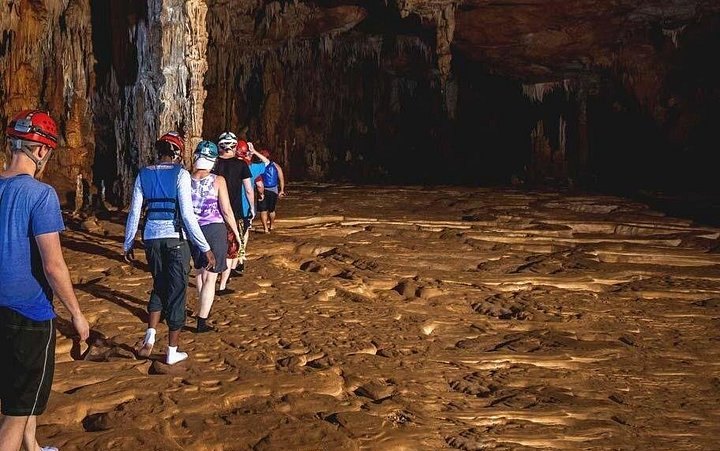
From the top of the ladder the group walks the dry floor in stocking feet, past ceramics and altars, with the remains spread along the route rather than gathered in one spot. The Crystal Maiden lies at the far end of that sequence, which is why it comes last on every tour and why nobody reaches it in a hurry. NICH records the whole cave system at 3.13 miles long, and the archaeology, including the skeleton, sits in the dry upper passages above the river.
Why the bones glitter
The glitter is a mineral coating. Water seeping through limestone carries dissolved calcite, and over centuries it has deposited a crust on the bone surfaces, the same process that built the formations around them. The skeleton has effectively become part of the cave floor, cemented in place and catching the light of a headlamp at certain angles. That is where the popular name came from.
The same chemistry is the reason the remains are so fragile and so strictly protected. Calcite does not repair itself. A knock from a boot, a trekking pole or a dropped object takes material off permanently, which is the thinking behind every rule you meet on the dry level.
ATM cave human remains: 14 sets on one floor
Published descriptions of the upper dry chamber count 14 sets of human skeletal remains, and the calcified Crystal Maiden is the best known of them. They belong to the ritual use of the cave that began in the Early Classic Period, dated by the Institute of Archaeology to A.D. 300-600. The Maya name for the place, used on NICH's own site page, means Cave of the Stone Sepulcher.
What the guide will put in order for you is the context: offerings and the dead were carried deep inside a living cave system, through water, into chambers that were never ordinary ground. Pottery and altars sit on the same floor, and the ritual artifacts page on this site goes through those deposits in detail, while the history page covers the span of use and the 1989 discovery by geologists.
The debate over the name
The name is a nickname rather than a scientific label, and researchers have questioned both halves of it. The reading of the individual as a young woman has been disputed, with arguments made for a different sex and for a different age at death than the popular account assumes. No official NICH or Institute of Archaeology page settles the point in public, so the honest position is that the identification is contested and the name stuck before the argument started.
Guides handle this differently from one another. Some present the traditional story, some open the disagreement up and explain what can and cannot be read from calcified bone in place, since the remains are not going to be lifted and examined on a lab bench. Ask yours directly if the question interests you; it is the one part of the visit where there is something to discuss rather than something to look at.
The standard day to the dry chamber
Nine hours from the operator's San Ignacio office with a specially licensed guide walking you along the marked route past the altars and the remains, helmet, headlamps and life jackets included, from $145 per person.
★ 5.0/5 · 1,507 reviews
How you are allowed to view it
Footwear comes off before you set foot on the archaeological level and socks are compulsory from there on, which means packing a pair you do not mind soaking on the way in. Everyone follows a single marked route, because the floor either side of it holds material. Hands stay empty on the dry level. Since May 2012, when a dropped camera damaged bone more than a thousand years old, cameras have not been allowed inside, and government rule now covers every electronic device; the only dry bag in the chamber is the guide's.
Time at the skeleton itself is short and the guide controls it. Groups are capped at six guests per ATM-certified guide and larger parties are split, so there is no crowd at the spot, but there is also no lingering while the next group waits behind you. Budget about 3 hours underground for the whole cave, approach and chambers together.
Two other rules catch people out at check-in. Swimwear-style tops and sleeveless shirts are not permitted for any visitor under the dress code, and photo ID is required at the point of entry. NICH's only published admission criterion is height: at least 40 inches.
- Socks only on the dry level, shoes off at the ladder
- Stay on the single marked route
- No cameras, phones, watches or any electronic device
- Six guests per ATM-certified guide
- No swimwear-style tops or sleeveless shirts
- Photo ID, and a minimum height of 40 inches
Which tours reach the dry chamber
Every licensed tour that enters Actun Tunichil Muknal goes to the upper dry level; there is no shorter version that stops at the river. There is also no way in without a guide: NICH policy requires every visitor to be on a guided tour arranged in advance with a licensed operator, and the official ticketing portal states that tickets for this site are sold only through those operators. The agents allowed to take anyone up to the chamber are a small licensed set, approved by the Belize Tourism Board together with NICH's Institute of Archaeology.
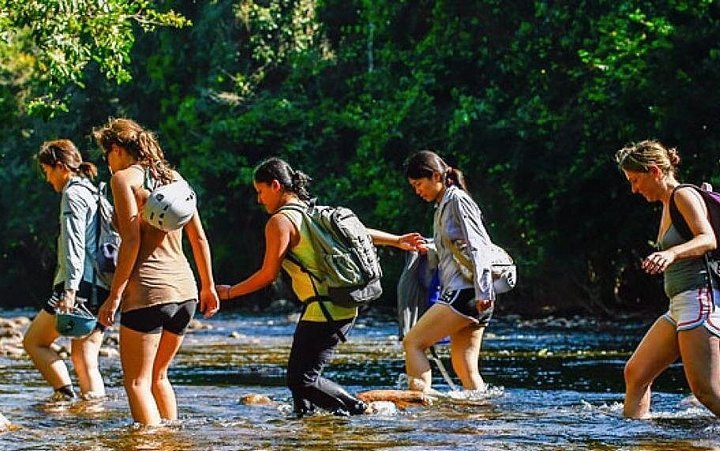
San Ignacio is where you want to start the day that ends at the skeleton: about 95% of tours to the cave leave from there, and the Belize Tourism Board describes roughly a 45-minute drive to the trailhead followed by a 45-minute hike before the water begins. Most people who see the Crystal Maiden do it on the 9-hour Cave Tour and Picnic, from $145 per person, ★ 5.0 (1507 reviews), which covers a specially licensed guide, helmet, headlamps and life jackets, a 3-hour walking tour of the cave system and lunch with a drink. The 7.5-hour Maya Sacrifice departure, also from $145 per person, ★ 4.8 (193 reviews), is the shorter day and includes all equipment, the entrance fee, an air-conditioned vehicle and a local lunch with juice.
Book it for an early morning in your Cayo stay and keep a spare day behind it. River levels decide whether anyone walks the dry floor at all, and the call belongs to the Institute of Archaeology on the day: days of heavy rain shut the cave on 18 October 2026, and it was open again by the morning of 19 October. Closure advisories go out on NICH's social media pages, which its own policy tells you to read before a site visit.
Questions people ask
Can I photograph the Crystal Maiden?
No. A camera dropped in May 2012 damaged skeletal remains more than a thousand years old, and cameras have been shut out of the cave ever since; government rule now covers all electronic devices as well. Visitors walk in empty-handed and only the guide carries a bag. The jungle trail to the entrance is the one part of the day where a camera is of any use, and it stays in the vehicle after that.
Is the skeleton behind glass or roped off?
There is no case and no barrier. The remains lie on the cave floor where they have calcified into it, and protection comes from the rules instead: a marked walking route, socks instead of shoes, nothing carried in your hands and a maximum of six guests per certified guide. The guide decides where the group stands and when it moves on.
Do children get to see it?
The only admission criterion NICH publishes is height, a minimum of 40 inches. Any age figure you come across is an operator's own reading: one licensed operator equates 40 inches to about five years old, while another prefers not to take under-12s, and NICH publishes neither number. Judge it against the day itself: a 45-minute hike with stream crossings, a swim at the cave mouth, a 12-foot ladder and about 3 hours underground.
What else is on the dry level besides the remains?
Ceramics and altars sit along the same floor, left from ritual use that the Institute of Archaeology dates to the Early Classic Period, A.D. 300-600. The route passes them before it reaches the far end of the chamber. The ritual artifacts page on this site covers the deposits, and the history page sets out the chronology and the 1989 find.
Which months give the best chance of getting in?
The dry months, roughly December to April, carry the lowest risk of finding the cave shut. Between May and November heavy rain can raise the river and make the reserve's approach roads impassable, and the decision is taken on the morning itself, as on 18 October 2026 when the site closed and then reopened the next day. Departures are morning ones, about 7:00 to 8:30 am, so check NICH's social media the evening before and again at breakfast.
Read also