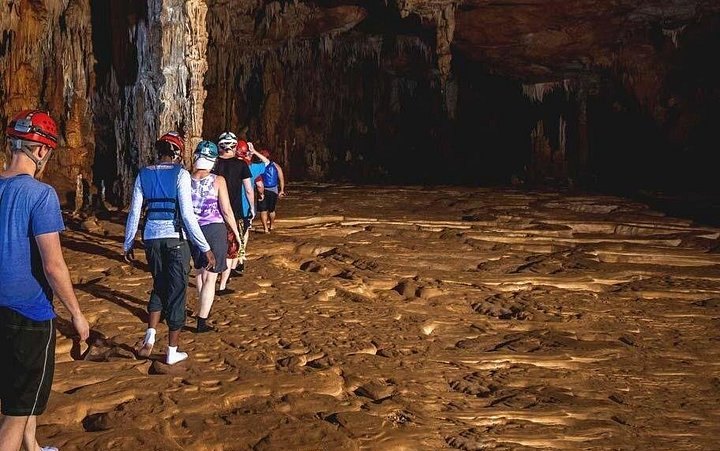
In shortATM stands for Actun Tunichil Muknal, the cave's Maya name cut down to its three initials. The official NICH page for the site gives the meaning as Cave of the Stone Sepulcher. Say it ahk-TOON too-nee-CHEEL mook-NAHL. Cash machines have nothing to do with it. NICH lists the location as Teakettle Village in the Cayo District.
Cave of the Stone SepulcherMeaning of the Maya name
A.D. 300-600Early Classic ritual use
3.13 milesCave system length per NICH
520.8 acresProtected ground around cave
What does ATM cave stand for
ATM is the short form of Actun Tunichil Muknal, one letter taken from each of the three words. Banks, cards and cash machines play no part in it. The overlap with the English abbreviation for an automated teller is coincidence, and it is what brings most people to this question in the first place.
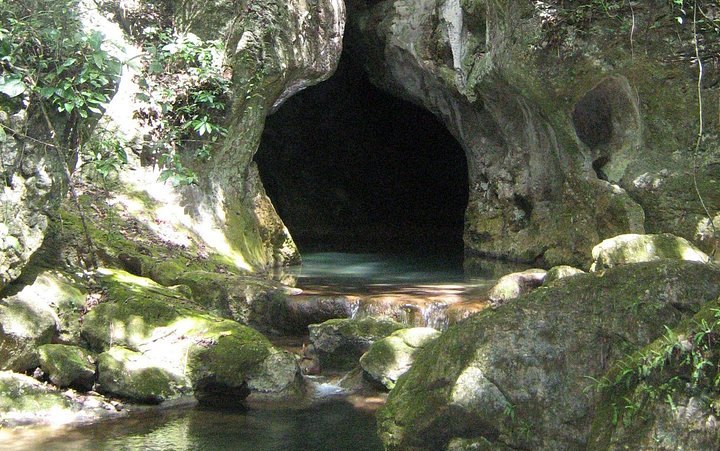
The meaning sits in the Maya name itself. The official NICH page for the site translates it as Cave of the Stone Sepulcher, which matches what the chambers hold: pottery, ground stone, offerings set on rock formations and 14 sets of human skeletal remains, all left where they were found. NICH dates the start of ritual use to the Early Classic Period, A.D. 300-600.
What each word in Actun Tunichil Muknal means
NICH publishes a translation of the whole name rather than a glossary, so the breakdown below follows that official wording, in the same order as the English.
Written out, the English version appears as Cave of the Stone Sepulcher, the spelling NICH uses, and as Cave of the Stone Sepulchre in British-English travel writing. Both point at the same cave.
- Actun: the cave
- Tunichil: the stone in the translation
- Muknal: the sepulchre, a burial place
The standard San Ignacio day
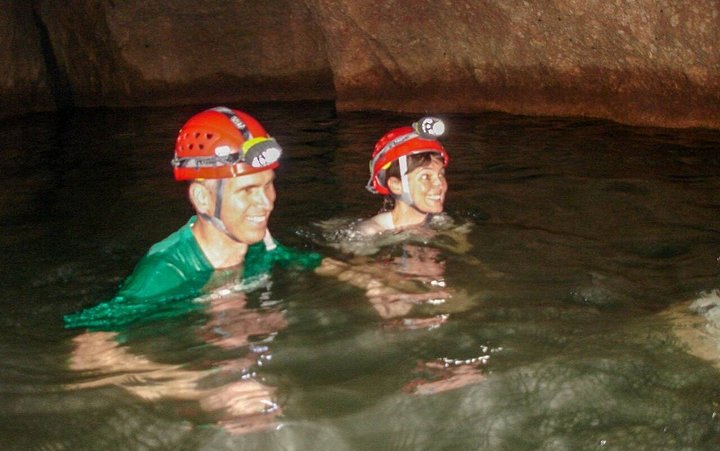
If reading the name has decided you, this 9-hour departure from the operator's San Ignacio office is the usual way in: a specially licensed guide, helmet, headlamps and life jackets, a 3-hour walking tour of the cave system and lunch with a drink, from $145 per person.
★ 5.0/5 · 1,507 reviews
Saying the name out loud
Keep the vowels flat and short, and put the stress on the last syllable of each word. Guides in Cayo will understand you long before you get it perfect, and in conversation almost everyone says ATM.
The spelling causes more trouble than the sound. Note the single k in Muknal, and the ch in Tunichil, which stays soft, as in cheese.
- Actun: ahk-TOON
- Tunichil: too-nee-CHEEL
- Muknal: mook-NAHL
- All together: ahk-TOON too-nee-CHEEL mook-NAHL
The other names you will see in listings
Searching for this cave means recognising four or five versions of one name. The abbreviation caught on because the full Maya name is long, unfamiliar to most English speakers and awkward to type, while tour titles, signage and everyday conversation all need something short. Operators and visitors settled on the three initials, and the full name stayed on the official pages and in the longer listing titles.
Some listings add a descriptive tag to the title instead of translating the name. One San Ignacio departure is sold as Maya Sacrifice, which points at the deposits on the upper dry level rather than at the wording of the Maya name.
| Name you will see | Where it comes from |
|---|
| Actun Tunichil Muknal | The Maya name used on the official NICH page for the site |
|---|
| ATM Cave | The three initials of the Maya name, the form used in most tour titles |
|---|
| A.T.M Cave | A punctuated spelling that turns up in some departure listings |
|---|
| Cave of the Stone Sepulcher | NICH's English translation of the Maya name |
|---|
| Cave of the Stone Sepulchre | The same translation in British spelling, common in travel writing |
|---|
Where the cave is, and how visitors get inside
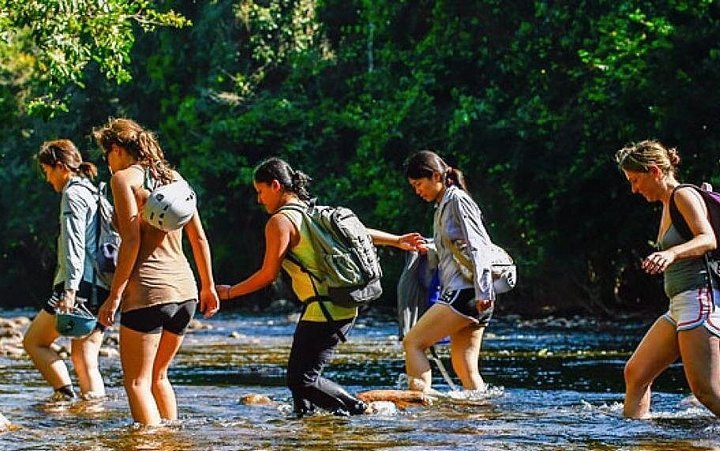
NICH gives the location as Teakettle Village in the Cayo District, which catches out readers who assume the cave sits in San Ignacio. About 95% of tours start from San Ignacio anyway, and the Belize Tourism Board puts the drive from town to the trailhead at roughly 45 minutes, with a hike of about another 45 minutes through the forest.
Two layers of protection cover the site. The cave lies inside Tapir Mountain Nature Reserve, 6,286 acres of lowland tropical evergreen forest and the first nature reserve declared in Belize, and NICH records 520.8 acres of protected ground immediately around the cave. The Institute of Archaeology under NICH administers it, with the Belize Audubon Society as co-manager.
Entry is only with a licensed operator. NICH policy requires every visitor to be on a guided tour arranged in advance, and the official ticketing portal states that tickets for this site are sold through licensed tour operators. For the shape of the day, start with the overview page on this site; the history page sets out the archaeology behind the name, the dating to A.D. 300-600 and the 1989 find by geologists. The tour listings show what each departure covers.
Questions people ask
What language is Actun Tunichil Muknal?
It is a Maya name, and NICH uses it as the official name of the site. The English rendering on the NICH page for the cave is Cave of the Stone Sepulcher. Tour listings and conversation in Cayo shorten it to ATM.
Should I search for ATM Cave or Actun Tunichil Muknal when booking?
Either works, since operators use both. Listings usually carry the full Maya name with ATM in brackets, and one departure from the cayes is written A.T.M Cave. If a search turns up little, try the short form.
Does the name refer to the Crystal Maiden?
No. The calcified set of remains known as the Crystal Maiden is one of the 14 sets on the upper dry level, and the nickname belongs to that individual. As NICH translates it, the cave's own name describes a stone burial place rather than any one person.
Is the spelling sepulcher or sepulchre?
NICH writes Cave of the Stone Sepulcher on its site page for the cave, so that is the form used here. British-English travel writing spells the same word sepulchre. Both render the same translation of the Maya name.
Can I see the Cave of the Stone Sepulcher on my own?
No. NICH policy requires every visitor to be on a guided tour, booked in advance through a licensed tour operator, and the official ticketing portal states that tickets for this site are sold only through those operators. Only a small licensed group of agents may lead groups inside.
Read also